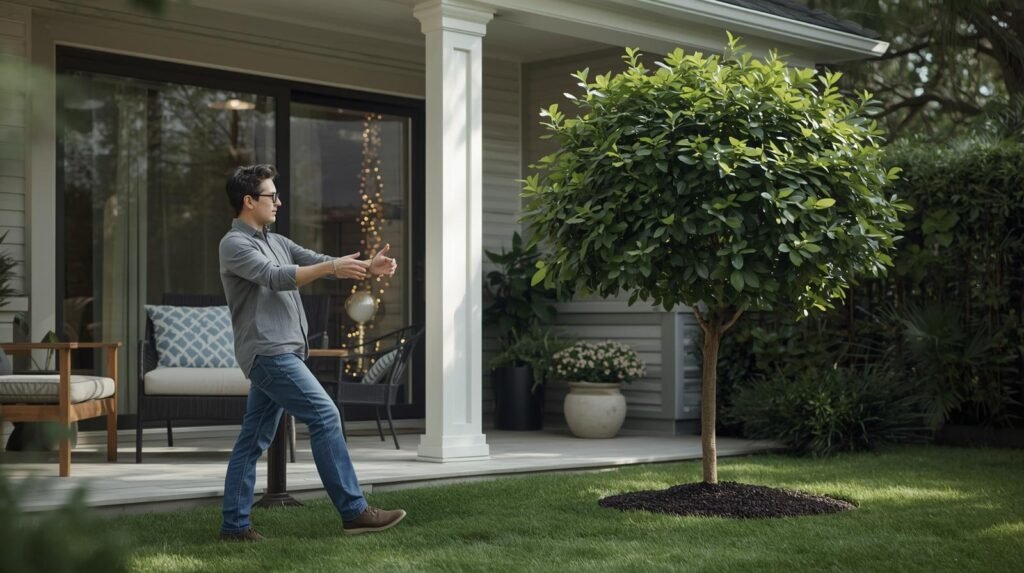
Maintaining a vibrant and appealing landscape can be a daunting task for those who invest in real trees. From regular watering to fighting off pests and diseases, the care required for living trees often demands significant time and resources.
Outdoor artificial trees emerge as a stress-free alternative, offering the beauty of natural greenery without the upkeep. In this article, we’ll explore the benefits of choosing faux trees for outdoor environments, and provide insights into making the most of these versatile decorations.
Struggling With Real Tree Maintenance? Consider Outdoor Artificial Trees
For those weary of the continuous upkeep required by real trees, artificial trees present an appealing solution. They bypass the challenges associated with traditional garden maintenance such as pruning, watering, and soil management—issues that can be especially taxing for those in regions with water restrictions or harsh climates.
The advancement in today’s synthetic foliage means that outdoor artificial trees now offer an incredibly lifelike appearance. This allows property owners to enjoy a manicured and lush landscape all year round, with minimal effort. With no dependency on climate or soil conditions, these trees can flourish in a variety of settings.
When considering a switch, it is beneficial to assess areas where natural growth is problematic and to explore the wide range of artificial options. outdoor artificial trees To ensure seamless integration, choose styles and sizes that complement the existing outdoor design and meet the aesthetic goals of the space.
Overcoming the Challenges of Live Trees with Artificial Alternatives
Live trees can present numerous challenges, from invasive root systems that threaten foundations and pavements to seasonal shedding that demands regular cleanup. Artificial alternatives deliver the charm of greenery without these common headaches.
Artificial trees are not subject to the same environmental stresses as live trees, such as drought, pests, or disease. This resilience translates into long-term savings on gardener fees, pesticides, and water bills, making them an economical choice over time. Additionally, they are often crafted from durable materials designed to withstand the elements and ultraviolet radiation.
For those transitioning from live to artificial trees, consulting landscape designers can help identify the most practical and aesthetically pleasing options. Companies such as Better Homes & Gardens can provide inspiration and tailored recommendations suited to diverse outdoor spaces and design preferences.
Enhancing Your Outdoor Spaces with Lifelike Artificial Trees
Enhancing outdoor areas with the right type of faux greenery can transform a bland space into a sanctuary. The visual appeal of lifelike artificial trees contributes to a pleasant and inviting atmosphere for homes, businesses, or public areas.
These trees come in an extensive variety of species and sizes, enabling a personalized touch that aligns with the natural flora of the region or the thematic intent of the space. Moreover, supplemental decorations like seasonal lighting or ornaments can easily be added to these trees to celebrate events or holidays without fear of damage to living plants.
To maximize the impact of artificial trees, consider factors such as scale, color balance, and placement that create natural-looking groupings or focal points. Professional advice or resources from Architectural Digest on blending artificial trees within a landscape can provide invaluable guidelines for a harmonious outdoor setting.
Making the Switch to Artificial Trees: A Sustainable and Convenient Choice
The movement towards outdoor artificial trees is not only a matter of convenience; it also aligns with sustainable principles. By eliminating the need for water, fertilizers, and chemical treatments, these trees contribute to a reduced environmental impact.
Moreover, the longevity of high-quality artificial trees means they can be a more sustainable option in the long run, as they won’t require replacement as often as live trees might due to disease or unsuitable growing conditions. This longevity also contributes to a reduction in green waste, further enhancing their eco-friendly advantage.
Transitioning to artificial greenery should involve selecting environmentally responsible products and manufacturers that use recycled or recyclable materials where possible. Doing so ensures that the benefits extend beyond convenience to actively support environmental stewardship.
Ultimately, replacing live trees with artificial alternatives offers a practical and visually appealing solution for those challenged by the demands of real tree maintenance. With their durability, eco-friendly attributes, and ability to enhance any outdoor space, artificial trees represent a wise investment for those seeking beauty without the burden. As they become increasingly realistic and varied, the possibilities for creating stunning, low-maintenance landscapes are virtually limitless.
I am Indian Blogger, Here I provide you best information on my OPGYAN.com blog. I have also obtained master's degree. I read everything very widely and on the basis of that knowledge I give all the information here.